What is canyoning?
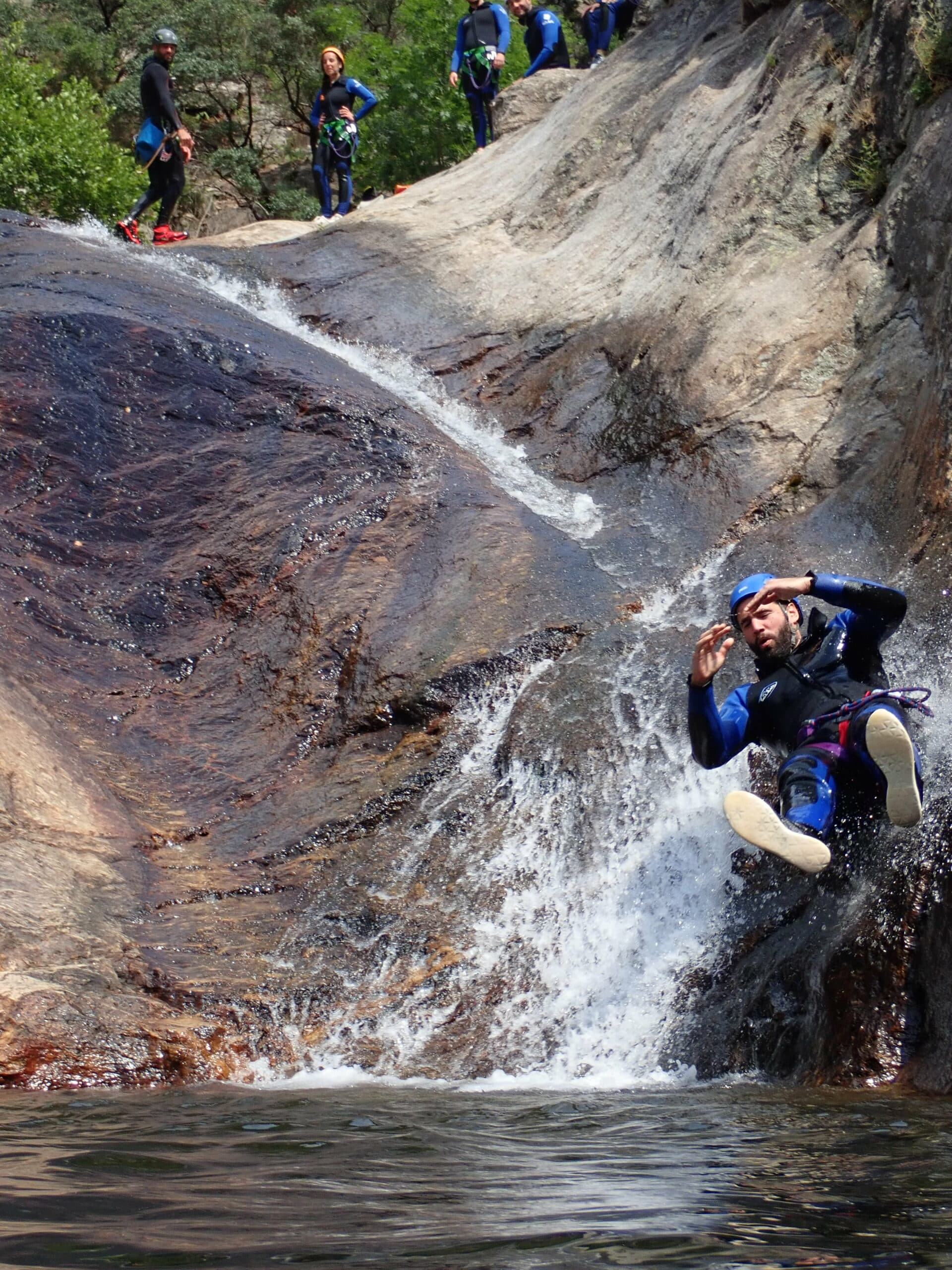
Natural slide
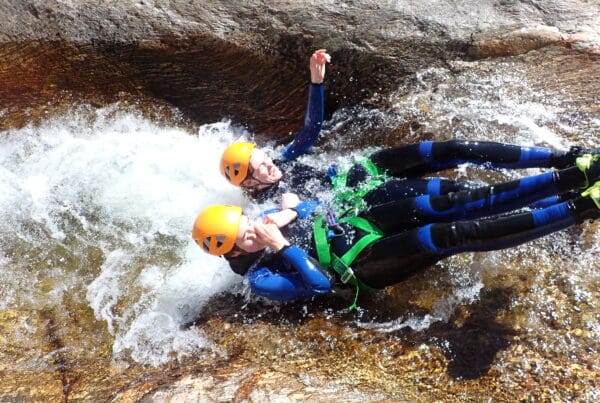
Canyoning, also known as canyonisme or canyoning descent, is a whitewater sport. It involves progressing through the bed of a watercourse in sections where it flows through narrow gorges or ravins. The activity is made fun by vertical crossings of waterfalls of various heights. River descent is a trendy spring and summer sport.
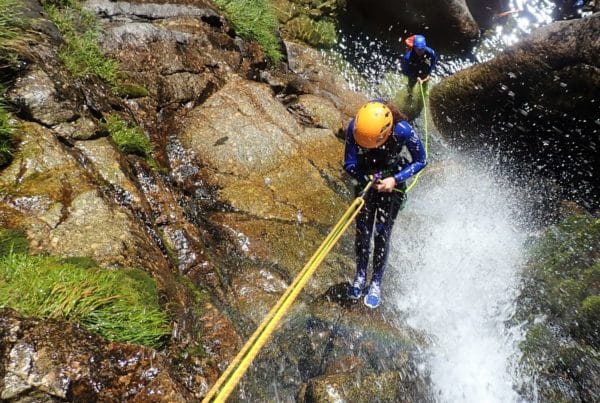
Canyoning is an outdoor activity that combines caving, hiking, and whitewater sports. It is a complete sport for lovers of thrills, fresh air, and new experiences. The primary goal when practicing this outdoor sport is to move along a watercourse by overcoming various obstacles, whether through rappelling, jumps, or sliding down natural slides. Canyoning offers a powerful experience in the heart of nature.
From the 1980s onwards, the activity really took off, moving from a confidential activity reserved for insiders to a mainstream leisure activity within everyone’s reach. With the arrival of new certifications and growing demand, canyoning saw a surge in the 1990s. The evolution of equipment also allows for higher quality outings in complete safety.
Who can go canyoning?
Canyoning can be practiced from the age of 8 with no real physical prerequisites. However, it is imperative to know how to swim and be in good health. You will also need to select a route adapted to your physical condition and level.
What equipment?
You often ask us about the right equipment for a canyoning trip. Here’s some advice on what to wear from head to toe, so you can enjoy the activity to the full. You’ll be all set for a canyoning adventure with family or friends on your next vacation.
Canyoning is often practiced in small mountain streams where the water is often cool, especially in the spring. In the summer, there are fewer constraints related to the cold.
To ensure our body heat is maintained at 37 degrees Celsius, it is good to prepare for canyoning before, during, and after the activity. Before starting a canyoning session, make sure you are sufficiently dressed so as not to tire the body unnecessarily. You will need all your energy later!
The wetsuit
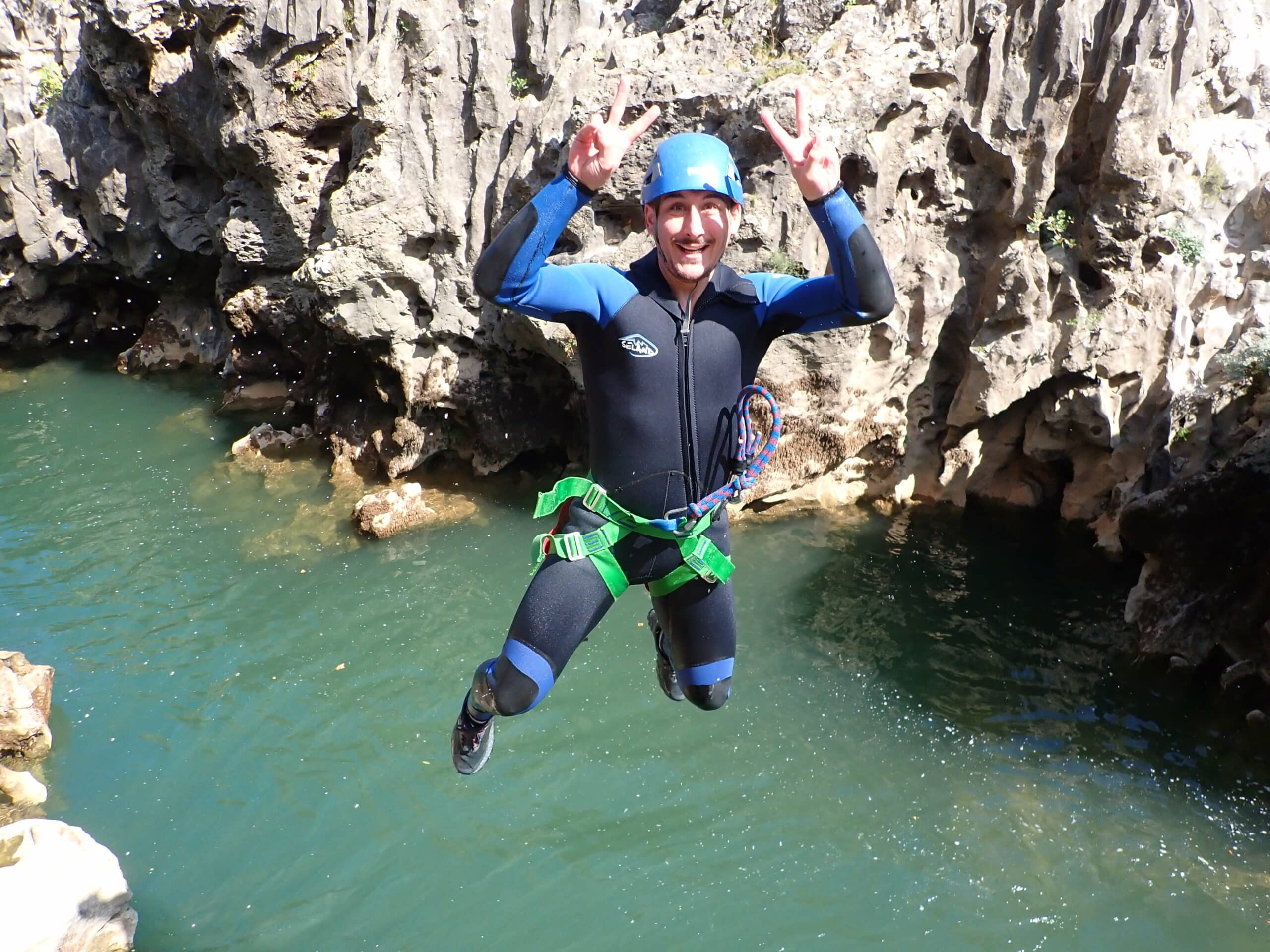
The right canyoning combination for a successful outing
During the activity, you’ll wear a neoprene wetsuit that’s tailored to your body size, as well as a swimsuit. Weight and size are essential when booking with your chosen company. Wetsuits are 4 to 5 mm thick to optimize ease of movement and thermal support. Wetsuits are generally full-body with integrated hoods. In tropical countries, shorty suits are available (suits with bare forearms and uncovered legs).
The advantage of a full-body suit is that, in addition to thermal comfort, it also provides good protection. It protects you from rubbing against rocks. It’s a great advantage, and means you can enjoy your canyoning outing with greater peace of mind.
The helmet
Canyoning is a demanding environment where the helmet is subject to vertical impacts (falling rocks) but also lateral ones (slips, impacts against walls in pools).
The helmet must carry the CE marking and meet the EN 12492 standard (Mountaineering and climbing helmets). Some recent models are certified “Top and Side Protection,” offering reinforced safety on the sides and back, which is particularly relevant for falls in aquatic environments.
Canyoning imposes constraints that pure climbing does not:
- Water drainage: Opt for models with well-placed ventilation holes so that water drains quickly after a jump or immersion (avoids the “suction” effect)
- Adjustment: The tightening system must be simple and manageable with wet or cold hands. Avoid adjustment wheels that are too thin
- Comfort: Internal foams should preferably be closed-cell or removable to dry quickly and avoid bad odors related to constant humidity
Gloves, top and lycra for extra comfort
For cool periods of the canyoning season, it is essential to wear a lycra or top for the upper body in addition to the neoprene wetsuit. For the feet, equip yourself with 3 mm neoprene socks. These are “second skins” very closely fitted to the body that will provide the most comfortable thermal support. Lycra suits can also be used to protect against sun rays during approach hikes. Neoprene gloves can also be used during very cool canyoning descents. This requires a bit more practice to be able to continue handling ropes and carabiners.
Finally, at the end of your outing, make sure you have dry, warm change of clothes and a bath towel.
Which shoes?
Correct footwear on a canyoning trip is a guarantee of comfort and safety.
Special shoes for this activity are available on the market, designed to maintain grip even on wet rock. These specialized shoes are still quite expensive, however, and are aimed at people who want to be autonomous in canyoning. For occasional outings, sneakers with non-smooth soles or hiking boots will do just fine.
High-top sneakers will protect your inner and outer malleoli. Alternating between water passages and boulder chaos requires good foot support.
Water shoes with very soft soles are generally not recommended for canyoning, especially if the route involves a lot of walking. This is because you’ll feel the stones in direct contact with your foot, which is not comfortable at all.
What about prescription glasses?
The question of prescription glasses is often raised when you’re out and about. Can I take them? Do I risk losing them? If I can’t see a thing, what am I going to do, and isn’t it dangerous? Are contact lenses a good alternative?
My main advice to people going to sessions with me is to take a good look first!
Having comfortable vision is essential during treks through boulder fields or before performing a jump. It is a guarantee of safety and it reassures us as instructors to know that you are sufficiently comfortable! I therefore advise taking your prescription glasses with a safety cord so as not to lose them. The moments when you are likely to lose them are the instants when your head will be totally submerged. These aquatic passages are encountered during jumps, natural slides, or ziplines ending in the water.
Practical tips for taking your glasses with you without losing them
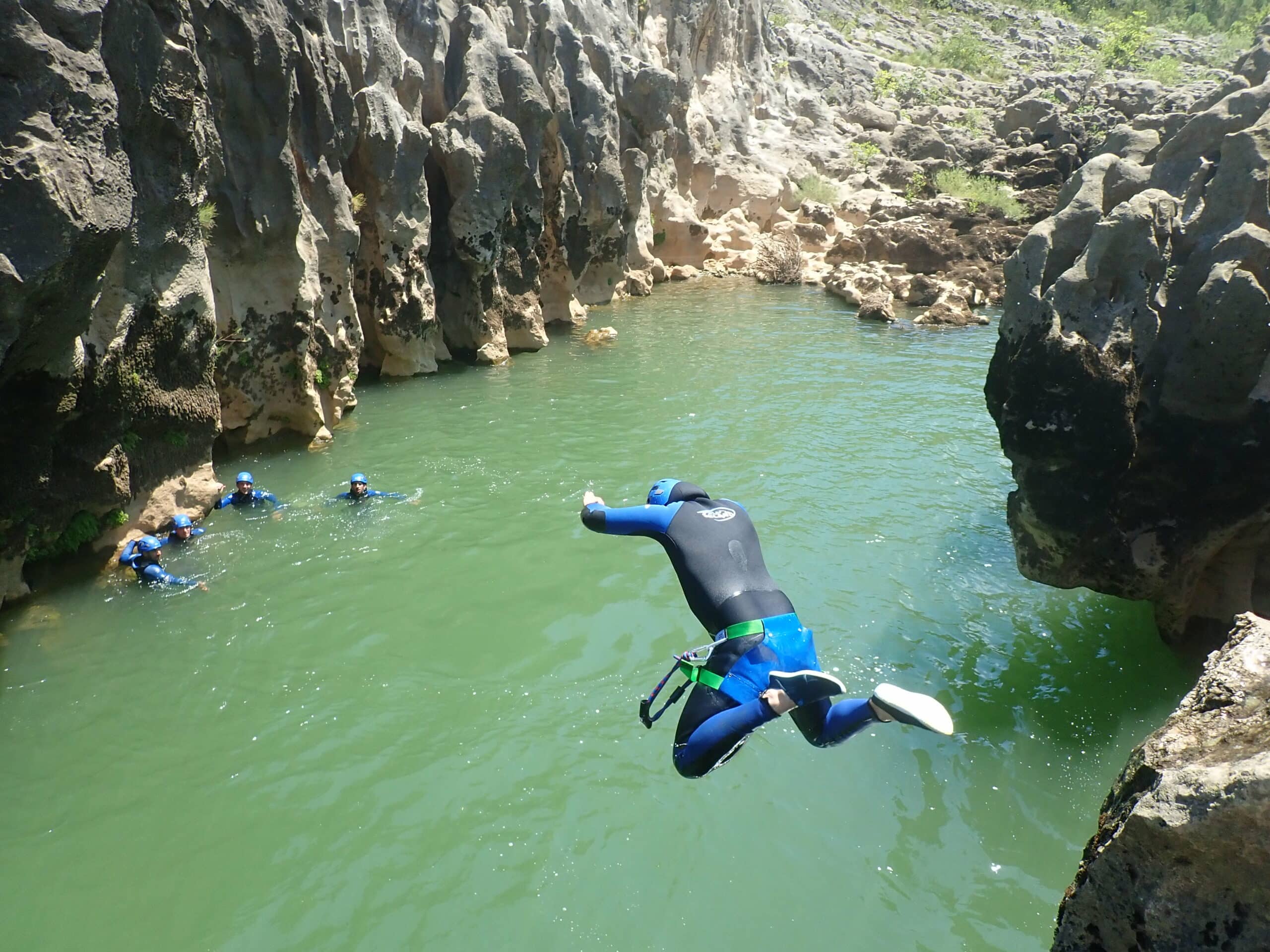
Good eyesight is essential for canyoning.
However, these fun workshops don’t make up the bulk of the activity, which is more about getting around in this canyon environment. For these aquatic passages, you have two options. Either hold your goggles on your nose with one hand and the other hand tightly against your body to make the jump; or position your goggles in your own wetsuit at torso level, having unzipped and then re-zipped the wetsuit correctly. This is a very good option that works very well. Once out of the water, you can put your goggles back on comfortably. This makes it easy to keep your goggles on hand throughout the activity.
The alternative of lentils is not recommended. Contact lenses tend to get lost more easily during water passages. You can’t find them because they’re too small, and the canyoning session ends without good vision. To use contact lenses, you’ll need diving goggles for water crossings, which can be cumbersome to use.
Safety equipment
You’ll need a harness and a helmet to move safely through the various vertical difficulties of a canyon.
This equipment should never be bought second-hand without a maintenance logbook. Each harness or helmet has a serial number that tells the story of the equipment. As an outdoor company, we adhere to a strict maintenance logbook. This enables us to track each piece of equipment over time. The equipment we use is classified as PPE (personal protective equipment).
A harness allows you to sit comfortably when abseiling on a rope. It can also be used to cross horizontal handrails. This is made possible by two safety lanyards fitted to the harness beforehand.
On the harness, you’ll find a connector and an eight. This is a metal descender that enables you to abseil down a rope in complete safety, while controlling your descent speed. Helmets are also a must-have in canyoning. It protects you from uncontrolled slips in slippery conditions. It also protects you in the event of falling rocks.
Ancillary equipment
The backpack and waterproof canteen, a useful piece of canyoning equipment
Ropes are the last essential safety element. They enable you to move vertically in the canyon, and to perform rescue and re-escape maneuvers if necessary.
Last but not least, you’ll need a special bag with a watertight canister. This bag is deliberately perforated at the bottom so that water can escape during water crossings. Inside the bag, you’ll find a watertight canister in which to store a first-aid kit and food! Bottled water can be carried in the bag, except for the waterproof can.
Naturéo Sport & Aventure provides you with all the necessary equipment: recent wetsuits, harnesses, protective helmets, and backpacks with waterproof containers.
With or without a guide?
The choice to practice canyoning with or without a guide essentially depends on your level of technical autonomy and your knowledge of the terrain. It is a magnificent but demanding discipline, where mistakes are rarely forgiven. Here is a comparison to help you decide.
With a guide (Professional supervision)
This is the recommended option for 95% of practitioners, from beginners to occasional athletes.
- Maximum safety: The guide manages the equipment, the anchors, and knows dangerous water movements (siphons, hydraulics)
- Simplified logistics: All technical equipment (5mm neoprene wetsuit, helmet, harness, ropes) is provided
- Peace of mind: The guide knows the exit routes in case of storms or fatigue, and masters rescue techniques
- Learning: This is an opportunity to discover the fauna and flora and learn the right moves without stress.
Without a guide (Autonomous practice)
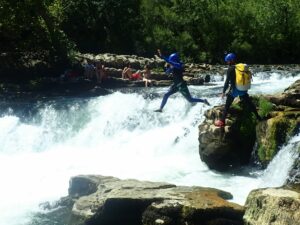
Practice canyoning in complete safety with a certified guide
This option is reserved for people who have followed specific training or for members of caving/mountain clubs.
- Total freedom: You choose your pace, your departure time, and your itinerary without group constraints
- Savings: No supervision fees, but the initial investment in equipment is heavy (expect €500 to €800 for quality complete equipment)
- Responsibility: You must know how to read local weather, evaluate water flow, and above all master rope techniques (releasable rappels, lock-off knots, progression on traverse lines).
If you are asking yourself the question, it probably means it is better to take a guide. Canyoning cannot be improvised: a peaceful stream can become a deadly trap in 15 minutes after a downpour upstream.
If you want to become autonomous
- Go on a few outings with a guide to see if you like the activity
- Sign up for an introductory course via the FFME (French Federation of Mountain and Climbing) or the FFS (Caving)
- Never go alone and always tell someone your expected exit time
What is your level of experience in climbing or rappelling so far?
Naturéo Sport & Aventure offers various canyoning routes in Hérault and Gard from April to October, whether you are a beginner or experienced.