Pic Saint-Loup. Ophrys34 ®
Pic Saint-Loup is one of the most iconic natural sites in Hérault and the Occitanie region. This limestone mountain has a rugged profile that’s instantly recognizable. Rising proudly above the Montpellier hinterland at 658 meters, Pic Saint-Loup is far more than just a limestone peak. It is a geological and historical landmark and, above all, the setting for one of the most beautiful legends of Languedoc.
Pic Saint-Loup didn’t wait for Sunday hikers to become popular. Its history is marked by human presence since Prehistory, but it was in the Middle Ages that it truly gained importance.
If you ask a local why the mountain bears this name, they’ll tell you the melancholy story of Loup, Guiral and Clair. In the Middle Ages, these three brothers—noble knights—were all in love with the beautiful Bertrade. Before leaving on a crusade, they promised to marry her upon their return. But when they came back from the Holy Land years later, they learned, to their sorrow, that Bertrade had died. Devastated by grief, they chose to renounce the world and live as hermits on the three peaks surrounding their home:
Each year, on the anniversary of their beloved’s death, they lit a huge bonfire on their respective summit to signal their presence and their shared remembrance. When the last brother died, the three mountains took their names for eternity.
It’s a favorite playground for locals and visitors alike for outdoor sports.
The main trail starts from the village of Cazevieille. Allow around 1 to 1.5 hours to reach the summit. The effort is rewarded with a 360° panoramic view over the Cévennes, the Mediterranean coastline and, on a clear day, Mont Ventoux.
Its very steep north face is a renowned spot for experienced climbers. If you’re sporty, love trying something new and are looking for fresh thrills, Naturéo Sport & Aventure offers a 4 to 5-hour hike-and-abseil outing.
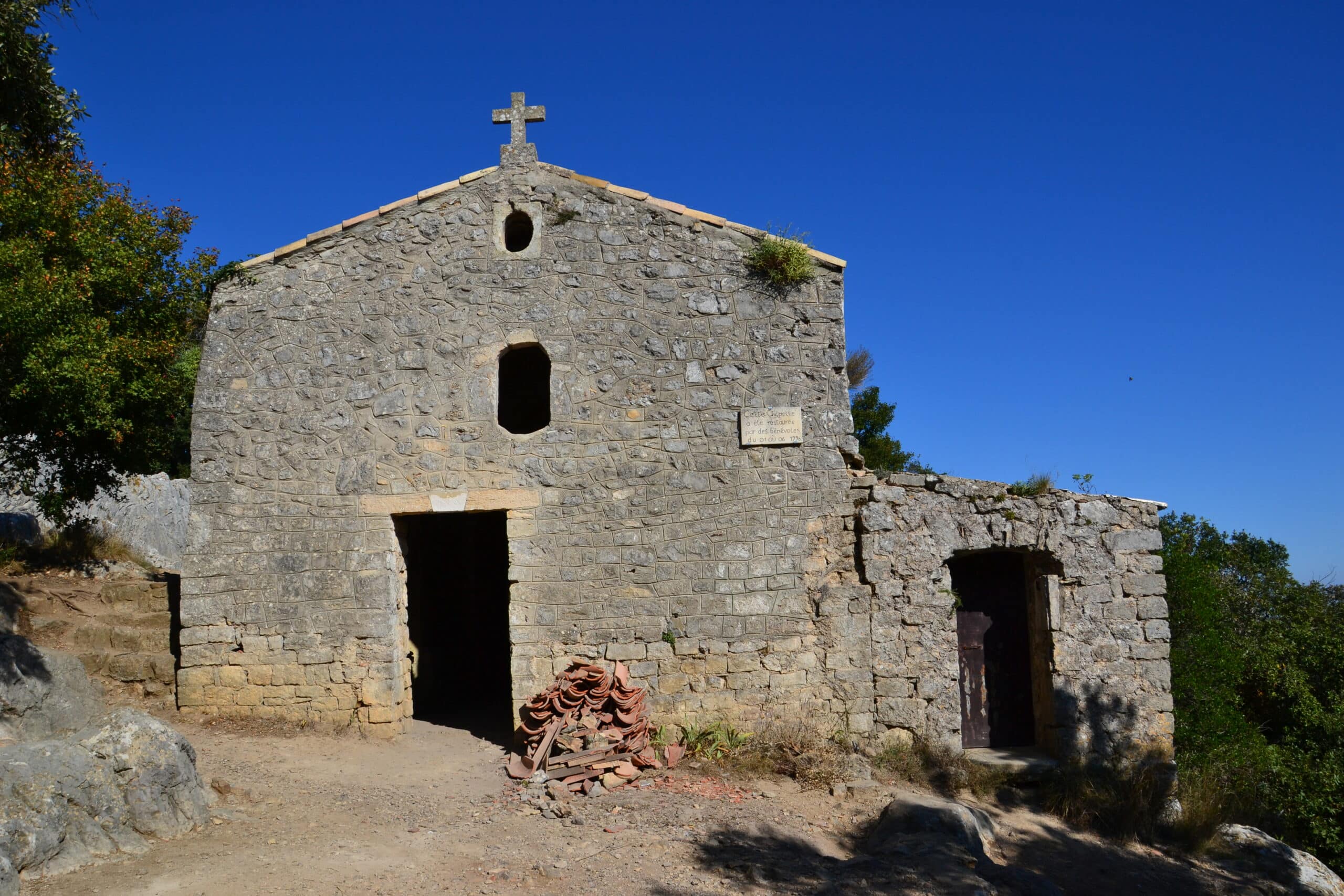
You’ll find a chapel (the Hermitage), a watch post and a monumental cross.
The name “Pic Saint-Loup” also refers to a prestigious AOP (Protected Designation of Origin). The vineyards thrive at the foot of the mountain, benefiting from a unique microclimate (cooler and more humid than the coast). The main grape varieties used are Syrah, Grenache and Mourvèdre. The red wines are known for their elegance, freshness, and notes of garrigue (thyme, rosemary) and dark fruits.
Spring and autumn are the ideal seasons for the ascent. In summer, it can be very hot, and access is sometimes regulated or prohibited due to wildfire risk. Wear good hiking shoes, as the terrain is very rocky (with slippery limestone in places).